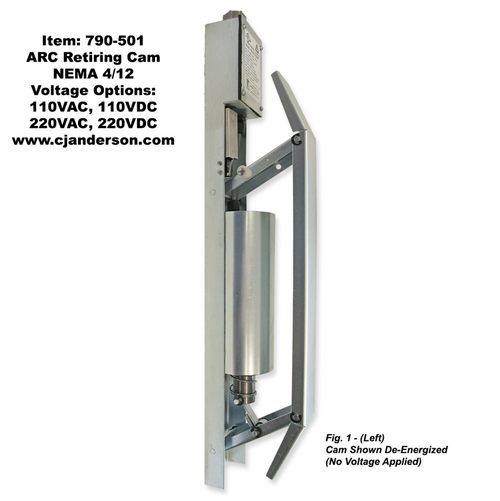


NOTE: This door locking device is built in both a Right-hand or Left-hand mounting interlocks. The hand is determined by standing inside the elevator looking out. The side on which the lock is to be mounted (Left or Right) is the hand to be ordered.
The LR Interlock has Two Contacts, wired in series together as part of the safety circuit. The upper is the door contact, the lower is the locking contact which is both electrical and mechanical. The interlock mounts on the door jamb or frame inside the hoist way. The locking latch mounts to the inside door edge. When the door is closed the upper (door) contact is made. When the retiring cam is retracted the bottom contact is made and the solid brass hook catches behind the locking bar, mechanically locking the door. When the car stops at a floor the retiring cam pushes the release roller, mechanically unlocking the door and opening the bottom electrical contact. When the door is opened the top contact drops by gravity. Although this is designed for use with a Retiring Cam it can be used with a Stationary Cam.
These Door Locks are mounted to the door frame or wall inside the hoist-way through mounting holes in the casting that bolt to a wall/door frame mounting adapter. The housing includes the contact making assembly, shafts and cam. At the top of the housing is a roller arm shaft with an adjustable roller arm. A conduit connection hole in the bottom of the housing is for wiring to the contact terminals.
When the elevator stops at the landing, the elevator controller signals the retiring cam on the elevator to activate which strikes the door locking roller arm. This allows the door to open and the door locking bar to exit the lock. The hoist-way door slides vertically upward and the locking bar mounted on the door mechanically opens the contacts after the door bar exits the locking device. When the door is closed the locking bar enters into the door locking device and closes the contacts signaling to the elevator controller that the doors are closed and the retiring cam can detract from the roller arm assembly. Once completed this door lock contact is then closed signaling to the elevator controller that the doors are both closed and locked. These contacts are part of the safety circuit and if either is opened the elevator will not run as long as they are wired correctly according to the elevator control company’s wiring diagrams.
Features:
- Solid Cast Parts
- Heavy Duty Contacts
- 250 Volts AC or DC
- Self Wiping Contacts
- Adjustable Roller Arm
 |
 |
 |
| ITEM: 78202 | NOT AVAILABLE | ITEM: 78202HS |
| 250V AC, 2 Amps | Min. Travel: 7/8” | Force: 1.8 lbs. | Heavy Duty Cast Iron Enclosure, Latch and Roller Arm, Self Wiping Metal Loaded Contacts | Please note that the design and construction of this interlock will not prevent water or dust from entering the enclosure. For wet, dusty environments like this we recommend using the hazardous location model as well as increasing your maintenance. | Hazardous Location Model - Class 1, Division 2 - Groups, A,B,C,D - Hermetically Sealed Contact Block Rated UL, CSA. Switch built to NEC Code requirements for Class 1, Division 2, Groups A,B,C & D Locations - (360VAC Inductive) |
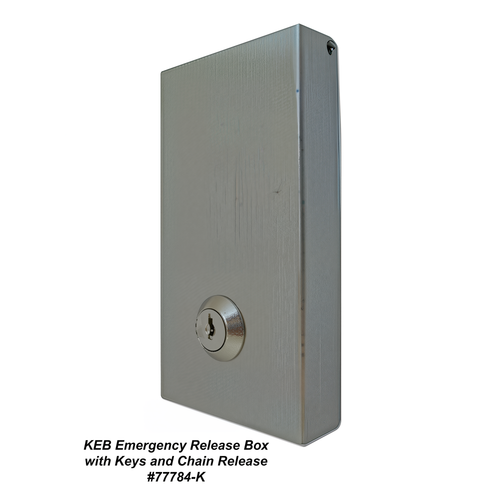
- KEB Emergency Door Release Box (SKU# 77784-K)
- ARC Retiring Cam (SKU# 790-501)